
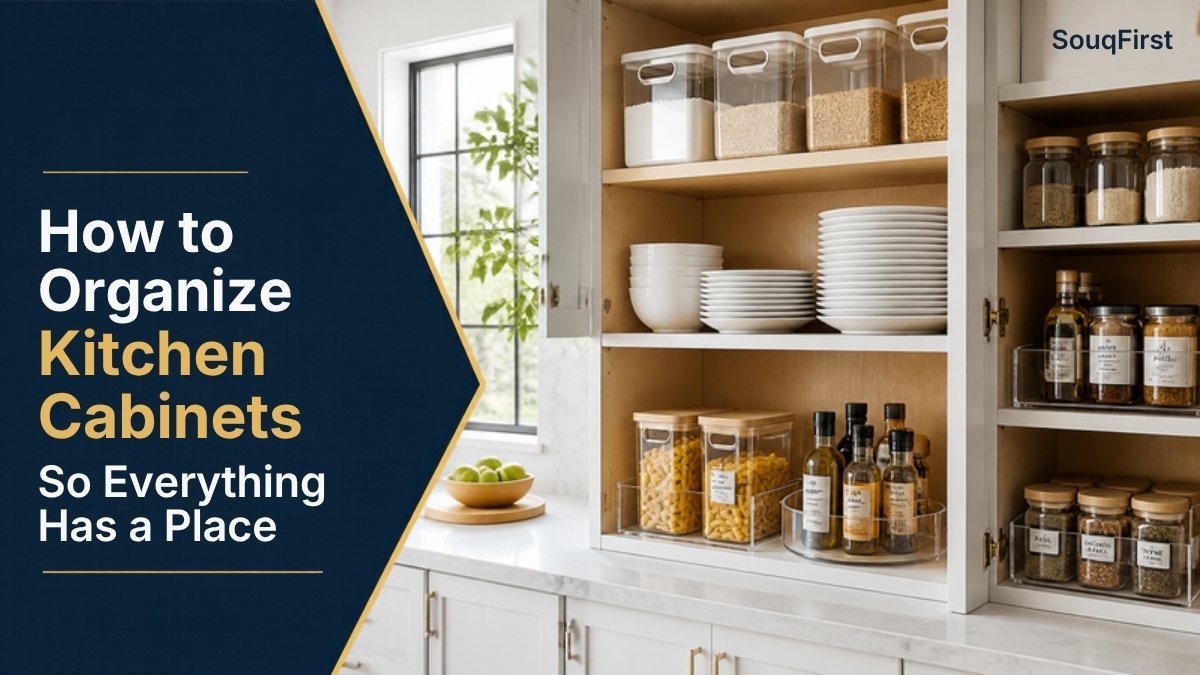
Messy cabinets slow down every meal. You dig for a lid, knock over a stack of bowls, and buy a second jar of cinnamon because you couldn’t find the first. The fix is not a perfect Pinterest kitchen. It is a simple system where every item has a home that makes sense. Here is a step-by-step plan that works in kitchens of any size.
Step 1: Empty one cabinet at a time
Trying to reorganize the whole kitchen in one afternoon is exhausting. Start with the cabinet that frustrates you most. Take everything out, wipe the shelves, and look at what you actually own.
Step 2: Declutter before you buy anything
Set aside items that are broken, duplicated or unused. A good question to ask is: “Have I used this in the last year?” Donate what still works. You will often find that you need fewer organizers than you thought once the extras are gone.
Step 3: Organize by zones
Professional organizers often recommend grouping items by where you use them. Typical kitchen zones include:
- Cooking zone: Pots, pans, spatulas and oils near the stove.
- Prep zone: Cutting boards, knives, mixing bowls and measuring cups near your main counter space.
- Dish zone: Plates, glasses and mugs near the dishwasher or sink, so unloading is quick.
- Food storage zone: Containers, foil and wraps together, ideally near where you pack leftovers.
- Baking zone: Sheet pans, baking dishes and mixers together in one spot.
Step 4: Put everyday items at eye level
Keep the things you use daily between your shoulders and knees. Store seasonal or rarely used items, like holiday platters or a large roasting pan, on the highest shelves or in the back.
Step 5: Use vertical space
Most cabinets waste the space above short stacks of dishes. A few simple tools help:
- Shelf risers create a second level for plates, mugs or canned goods.
- Vertical dividers store cutting boards, sheet pans and baking dishes on their sides so you can pull one out without lifting the rest.
- Under-shelf baskets use the gap under a shelf for wraps or small items.
- Door-mounted racks hold lids, spices or cleaning cloths. Measure the depth first so the door still closes.
Step 6: Make deep cabinets easy to reach
Corner and lower cabinets are where things disappear. Pull-out drawers or sliding baskets bring items to you. Turntables (lazy Susans) work well for oils, sauces and spices in corners. Clear bins with handles let you pull out a whole category at once.
Step 7: Label and maintain
Labels on shelf edges or bins help everyone in the house put things back in the right place. Then build a quick habit: once a month, take five minutes to reset one cabinet before clutter builds up again.
Quick wins for small kitchens
- Nest mixing bowls and measuring cups.
- Store lids vertically in a rack or file organizer.
- Keep only the pots and pans you use regularly in the main cabinet.
- Use the inside of cabinet doors for lightweight items.
Frequently asked questions
Where should plates go in the kitchen?
Near the dishwasher or sink is usually most practical, because it makes unloading faster.
How do I organize pots and pans?
Store them near the stove. Use a vertical rack or pan organizer so you are not lifting a heavy stack to reach the one at the bottom.
Should I use clear containers?
Clear bins and canisters make it easy to see what you have, which helps prevent duplicate buys. Choose sizes that fit your shelves before buying a whole set.
The bottom line
Organized cabinets come from three things: owning less, grouping items by where you use them, and making the back and top of each cabinet easy to reach. Start with one cabinet this week.
Need storage to get started? Browse our Storage & Organization collection.
Leave a Reply