Home » Buying Guides

Category: Buying Guides

  • How to Choose a Coffee Maker: Drip, Pod, French Press or Espresso

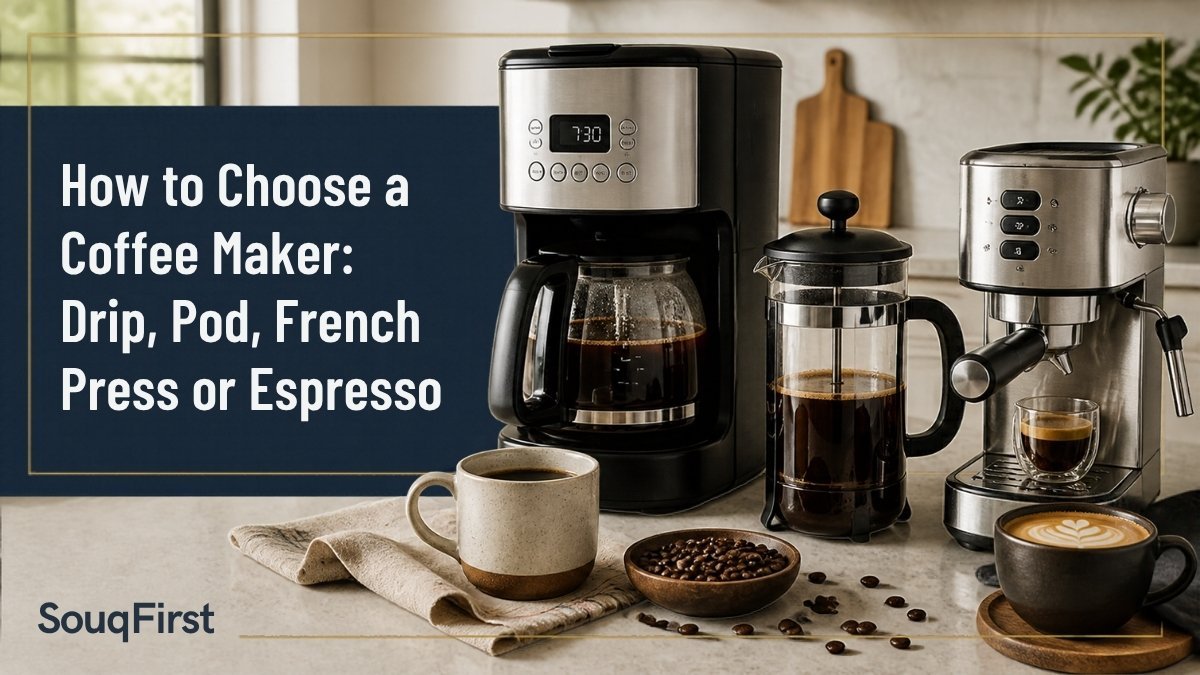
    How to Choose a Coffee Maker: Drip, Pod, French Press or Espresso

    This buying guide is based on independent research, not hands-on testing of specific models.

    The best coffee maker is the one that fits your morning. Some people want a full pot ready on a timer. Others want one fast cup, or a rich espresso drink. Here is how the most common types compare, so you can choose with confidence.

    Start with three questions

    1. How many cups do you make a day? One cup or a whole pot?
    2. How much time do you have? Push-button convenience, or a few minutes of hands-on brewing?
    3. What do you like to drink? Regular coffee, strong coffee, or espresso-based drinks like lattes?

    Drip coffee makers

    The classic choice for American homes. You add ground coffee and water, press a button, and it brews a pot.

    • Best for: Families, offices, and anyone who drinks several cups a day.
    • Pros: Easy, consistent, makes many cups at once; many models offer programmable timers.
    • Cons: Coffee can taste stale if it sits on a hot plate for a long time. A thermal carafe keeps coffee hot without the hot plate.

    Single-serve pod machines

    These brew one cup at a time from a pre-filled pod or capsule.

    • Best for: Households where people want different drinks at different times.
    • Pros: Very fast, almost no cleanup, consistent results.
    • Cons: Cost per cup is usually higher than ground coffee, and pods create waste. Reusable pods can help with both.

    French press

    A simple glass or steel pitcher with a mesh plunger. Coffee steeps in hot water, then you press the grounds down.

    • Best for: Coffee lovers who want rich, full-bodied flavor.
    • Pros: Inexpensive, no electricity or paper filters needed, easy to control strength.
    • Cons: Takes a few minutes of hands-on time, and some fine sediment ends up in the cup.

    Pour-over

    You pour hot water slowly over grounds in a cone with a paper filter.

    • Best for: People who enjoy the brewing ritual and a clean, bright cup.
    • Pros: Inexpensive gear and a lot of control over flavor.
    • Cons: Requires a kettle, ideally a gooseneck, and a bit of practice.

    Espresso machines

    Espresso machines force hot water through finely ground coffee under pressure. They range from manual machines to fully automatic models that grind and brew at the push of a button.

    • Best for: Latte and cappuccino lovers.
    • Pros: Café-style drinks at home; many include a milk frother.
    • Cons: Higher upfront cost, a learning curve, and more cleaning. Good results usually need a quality grinder.

    Features worth paying attention to

    • Capacity: Match it to how much you drink.
    • Programmable timer: Wakes you up to fresh coffee.
    • Thermal carafe: Keeps coffee hot without burning it.
    • Removable water tank: Makes refilling easier.
    • Easy descaling: All machines need descaling, especially if you have hard water. Look for clear instructions.
    • Counter footprint: Measure the space under your cabinets, especially for taller machines.

    Frequently asked questions

    What type of coffee maker makes the best-tasting coffee?

    Taste is personal. French press gives a rich body, pour-over a clean and bright cup, and espresso a concentrated drink. Freshly ground beans make a bigger difference than the machine for many people.

    How often should I clean my coffee maker?

    Rinse removable parts after each use and descale regularly following the manufacturer’s instructions.

    Are pod coffee makers more expensive to use?

    Usually, yes. Pods typically cost more per cup than buying ground coffee or whole beans.

    The bottom line

    Choose drip for volume, pods for speed, French press or pour-over for flavor on a budget, and espresso if you love café drinks. Think about your daily routine first, and the right choice becomes clear.

    Browse our Kitchen Appliances and Affiliate Picks.
    Related articles

  • How to Choose a Chef’s Knife: A Beginner’s Buying Guide

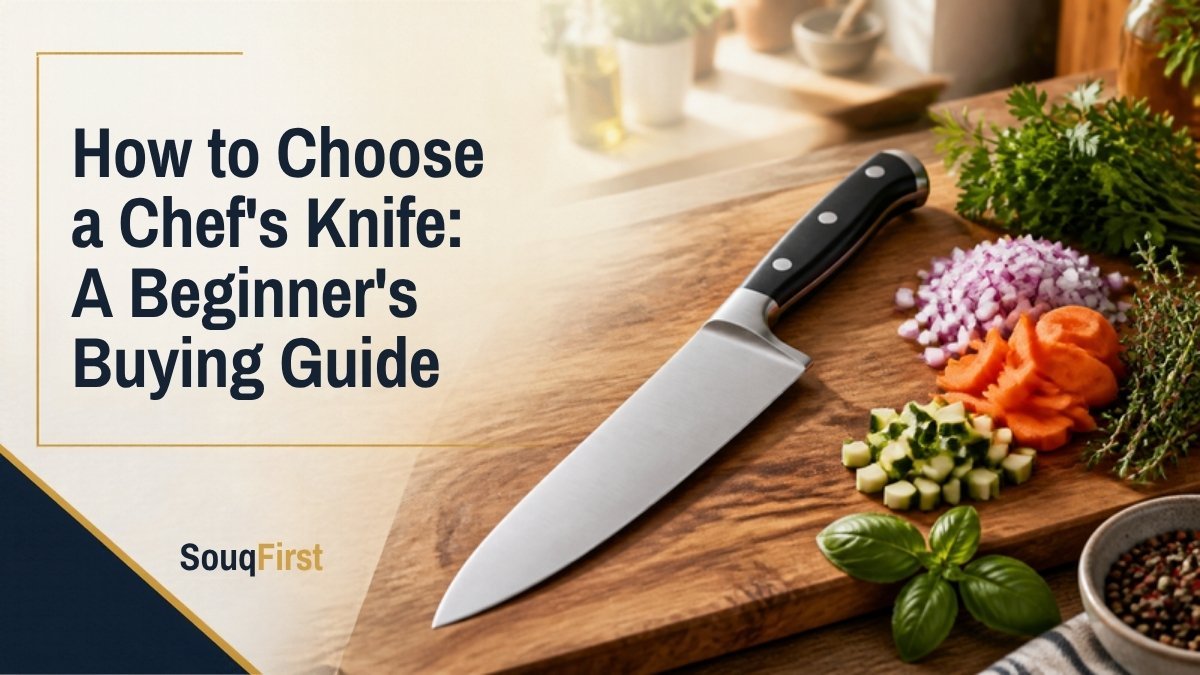
    How to Choose a Chef’s Knife: A Beginner’s Buying Guide

    This buying guide is based on independent research, not hands-on testing of specific models.

    A good chef’s knife does most of the work in a home kitchen: chopping onions, slicing chicken, mincing herbs and cutting vegetables. If you buy only one quality knife, this is the one. Here is what actually matters when choosing one, and what you can safely ignore.

    Blade length: start with 8 inches

    Chef’s knives usually range from about 6 to 10 inches. An 8-inch blade is the most common choice because it is long enough for big vegetables and short enough to control. If you have smaller hands or a small cutting board, a 6- or 7-inch knife may feel more comfortable. A 10-inch blade suits experienced cooks who prep large amounts of food.

    German style vs Japanese style

    Most chef’s knives fall into two broad styles:

    • German-style (Western) knives are typically heavier, with a thicker blade and a curved edge that rocks well for chopping. The steel is usually a little softer, which makes the edge more forgiving and less likely to chip, though it may need honing more often.
    • Japanese-style knives (often called gyuto) are typically lighter and thinner, with harder steel that can take a very sharp edge. They excel at precise slicing, but the harder edge can chip if used on bones, frozen food or glass boards.

    Neither is better. Choose German-style if you want durability and a heavier feel; choose Japanese-style if you want a lighter knife for precise cuts and are willing to take more care with it.

    Blade material

    • Stainless steel resists rust and stains and is the easiest to care for. It is the best choice for most home cooks.
    • High-carbon stainless steel is a common label for blades designed to balance edge sharpness with rust resistance.
    • Carbon steel can get very sharp but rusts and discolors if not dried right away. It suits enthusiasts.
    • Ceramic blades stay sharp for a long time but are brittle and can chip or break if dropped.

    Handle and balance

    The best knife is the one that feels secure in your hand. Look for a handle that does not get slippery when wet and a balance point that feels natural, often close to where the blade meets the handle. If you can, hold a knife in a store before buying one online.

    Full tang vs partial tang

    “Full tang” means the metal of the blade runs through the entire handle. Many cooks like the balance and sturdiness this gives. Well-made knives with other constructions can also perform well, so treat tang as one factor rather than a rule.

    What you can skip

    • Huge knife blocks. A chef’s knife, a paring knife and a serrated bread knife cover most home cooking.
    • “Never needs sharpening” claims. Every edge dulls with use.

    How to keep your knife sharp

    • Use a wood or plastic cutting board, never glass, stone or ceramic.
    • Hand-wash and dry the knife right away. Dishwashers can dull the edge and damage handles.
    • Hone the edge regularly with a honing rod, and sharpen when honing no longer helps.
    • Store it in a block, on a magnetic strip, or with a blade guard, not loose in a drawer.

    Frequently asked questions

    What size chef’s knife is best for beginners?

    An 8-inch knife suits most people. Choose 6 or 7 inches if you have smaller hands or limited counter space.

    Is an expensive knife worth it?

    A mid-range knife with good steel and a comfortable handle is enough for most home cooks. Care and sharpening matter more than price.

    How often should I sharpen a chef’s knife?

    It depends on how much you cook. Honing helps between sharpenings; many home cooks sharpen a few times a year.

    The bottom line

    For most home cooks, an 8-inch stainless steel chef’s knife with a comfortable handle is the right first choice. Pick the style that matches how you cook, and take good care of the edge.

    See our Kitchen Accessories collection and hand-picked options in Affiliate Picks.

    Related articles

  • Air Fryer vs Convection Oven: Which One Fits Your Kitchen?

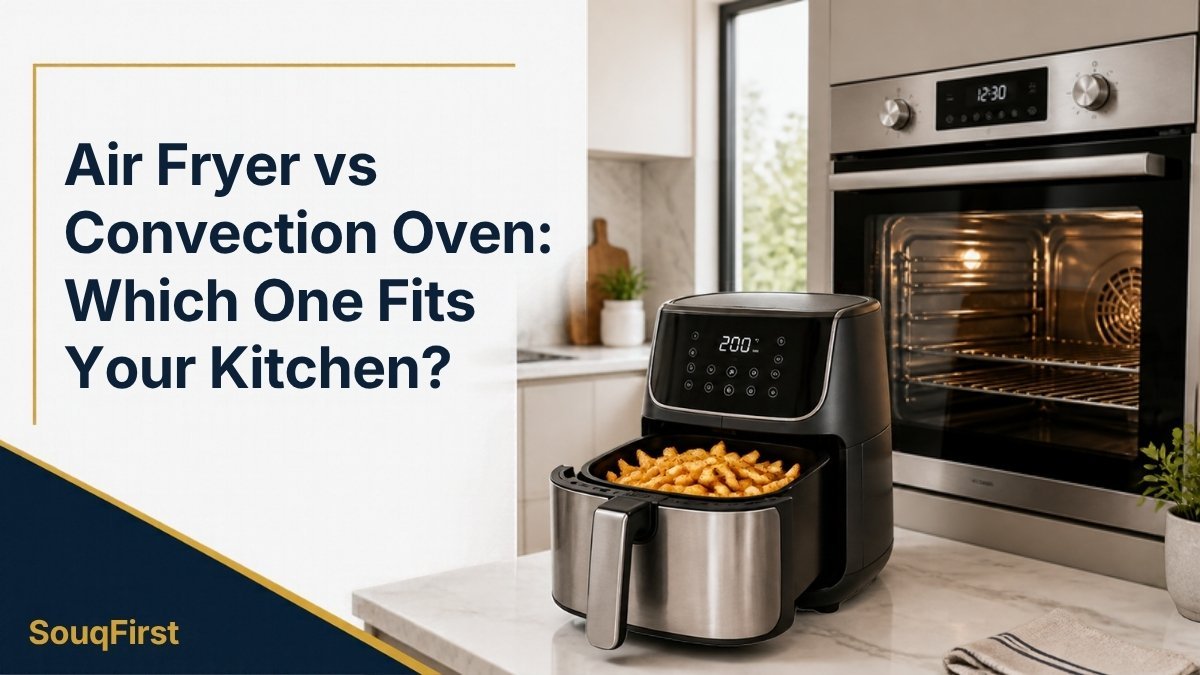
    Air Fryer vs Convection Oven: Which One Fits Your Kitchen?

    This buying guide is based on independent research of how these appliances work, not hands-on lab testing. Always check the specifications of the exact model you are considering.

    Air fryers are one of the most popular kitchen appliances in American homes, but many people wonder whether they are really different from the convection setting on an oven or a convection toaster oven. The short answer: they use the same basic idea, but they are built for different jobs. Here is how to decide which one makes more sense for your kitchen.

    How each one works

    A convection oven has a fan that circulates hot air around the food. The moving air removes the cooler layer of air that surrounds food, so it cooks more evenly and often a little faster than a regular oven.

    An air fryer is essentially a small, powerful countertop convection oven. Its fan is usually close to the food and the cooking chamber is compact, so hot air moves quickly over a small amount of food. That is why air fryers are good at making food crisp with little oil.

    Key differences at a glance

    • Capacity: Air fryers are compact and best for one to four servings. A full-size convection oven can handle sheet pans, roasts and family meals.
    • Speed: Air fryers preheat quickly or not at all, which makes them convenient for small, fast meals. Large ovens take longer to heat up.
    • Crispness: Air fryers usually brown and crisp small batches very well, such as fries, wings and roasted vegetables.
    • Versatility: Convection ovens can bake cakes, cookies, casseroles and large roasts that do not fit in most air fryers.
    • Counter space: An air fryer takes up counter space; a built-in convection oven does not. Convection toaster ovens sit in between.
    • Cleanup: Many air fryer baskets are dishwasher-safe, but check the manual. Oven cleanup takes more effort.
    • Energy use: A small appliance heating a small space can use less energy for small meals than heating a full oven. The difference depends on the models and how long you cook.

    Choose an air fryer if you…

    • Cook for one or two people most of the time
    • Want fast weeknight meals and reheated leftovers that stay crisp
    • Love frozen snacks, wings, fries and roasted vegetables
    • Don’t want to heat up the whole kitchen in summer

    Choose a convection oven if you…

    • Cook for a family or entertain often
    • Bake regularly
    • Need to cook a whole sheet pan or a large roast
    • Prefer to keep appliances off the counter

    What about an air fryer toaster oven?

    Many convection toaster ovens now include an “air fry” setting. They are larger than basket air fryers and can toast, bake and broil, which makes them a good middle ground for small kitchens. The trade-off is that they can take up more counter space and may not crisp as fast as a basket-style air fryer.

    What to look for when buying

    • Capacity in quarts: About 2 to 4 quarts suits one or two people; 5 quarts and up suits families.
    • Controls: Simple dials versus digital presets. Presets are handy but not essential.
    • Basket or tray coating: Look for clear care instructions and dishwasher-safe parts if that matters to you.
    • Safety listing: Check for a recognized safety certification mark on the product listing or label.
    • Noise: Fans make noise. Reviews from verified buyers can give a sense of how loud a model is.

    Frequently asked questions

    Can an air fryer replace an oven?

    For small households, it can handle many everyday meals. Most people still need an oven for baking and large dishes.

    Do I need to use oil in an air fryer?

    Many foods need little or no oil. A light coating helps vegetables and fresh potatoes brown.

    Is a convection oven the same as an air fryer?

    They use the same principle, a fan moving hot air, but an air fryer is smaller and moves air more intensely around a small amount of food.

    The bottom line

    If you cook small portions and love crispy food fast, an air fryer is a great addition. If you cook big meals or bake often, the convection oven is the more versatile tool. Many kitchens end up using both.

    Explore our Kitchen Appliances collection and our Affiliate Picks from trusted retailers.

    Related articles