
This buying guide is based on independent research, not hands-on testing of specific models.
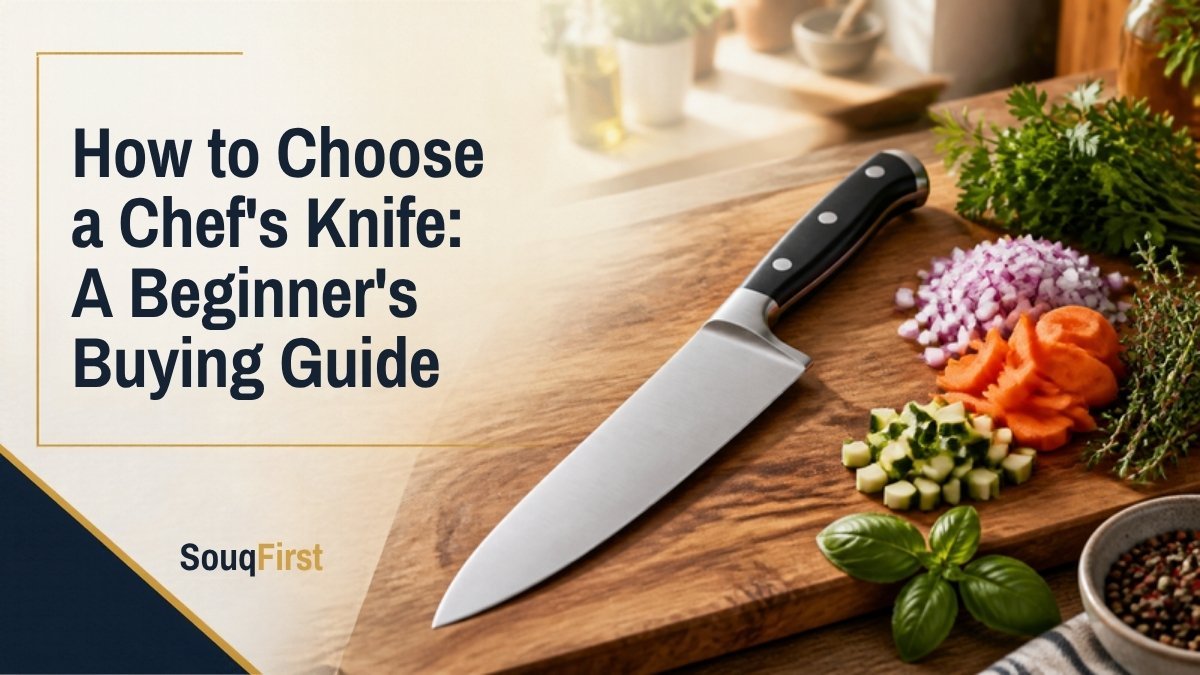
A good chef’s knife does most of the work in a home kitchen: chopping onions, slicing chicken, mincing herbs and cutting vegetables. If you buy only one quality knife, this is the one. Here is what actually matters when choosing one, and what you can safely ignore.
Blade length: start with 8 inches
Chef’s knives usually range from about 6 to 10 inches. An 8-inch blade is the most common choice because it is long enough for big vegetables and short enough to control. If you have smaller hands or a small cutting board, a 6- or 7-inch knife may feel more comfortable. A 10-inch blade suits experienced cooks who prep large amounts of food.
German style vs Japanese style
Most chef’s knives fall into two broad styles:
- German-style (Western) knives are typically heavier, with a thicker blade and a curved edge that rocks well for chopping. The steel is usually a little softer, which makes the edge more forgiving and less likely to chip, though it may need honing more often.
- Japanese-style knives (often called gyuto) are typically lighter and thinner, with harder steel that can take a very sharp edge. They excel at precise slicing, but the harder edge can chip if used on bones, frozen food or glass boards.
Neither is better. Choose German-style if you want durability and a heavier feel; choose Japanese-style if you want a lighter knife for precise cuts and are willing to take more care with it.
Blade material
- Stainless steel resists rust and stains and is the easiest to care for. It is the best choice for most home cooks.
- High-carbon stainless steel is a common label for blades designed to balance edge sharpness with rust resistance.
- Carbon steel can get very sharp but rusts and discolors if not dried right away. It suits enthusiasts.
- Ceramic blades stay sharp for a long time but are brittle and can chip or break if dropped.
Handle and balance
The best knife is the one that feels secure in your hand. Look for a handle that does not get slippery when wet and a balance point that feels natural, often close to where the blade meets the handle. If you can, hold a knife in a store before buying one online.
Full tang vs partial tang
“Full tang” means the metal of the blade runs through the entire handle. Many cooks like the balance and sturdiness this gives. Well-made knives with other constructions can also perform well, so treat tang as one factor rather than a rule.
What you can skip
- Huge knife blocks. A chef’s knife, a paring knife and a serrated bread knife cover most home cooking.
- “Never needs sharpening” claims. Every edge dulls with use.
How to keep your knife sharp
- Use a wood or plastic cutting board, never glass, stone or ceramic.
- Hand-wash and dry the knife right away. Dishwashers can dull the edge and damage handles.
- Hone the edge regularly with a honing rod, and sharpen when honing no longer helps.
- Store it in a block, on a magnetic strip, or with a blade guard, not loose in a drawer.
Frequently asked questions
What size chef’s knife is best for beginners?
An 8-inch knife suits most people. Choose 6 or 7 inches if you have smaller hands or limited counter space.
Is an expensive knife worth it?
A mid-range knife with good steel and a comfortable handle is enough for most home cooks. Care and sharpening matter more than price.
How often should I sharpen a chef’s knife?
It depends on how much you cook. Honing helps between sharpenings; many home cooks sharpen a few times a year.
The bottom line
For most home cooks, an 8-inch stainless steel chef’s knife with a comfortable handle is the right first choice. Pick the style that matches how you cook, and take good care of the edge.
See our Kitchen Accessories collection and hand-picked options in Affiliate Picks.
Leave a Reply