
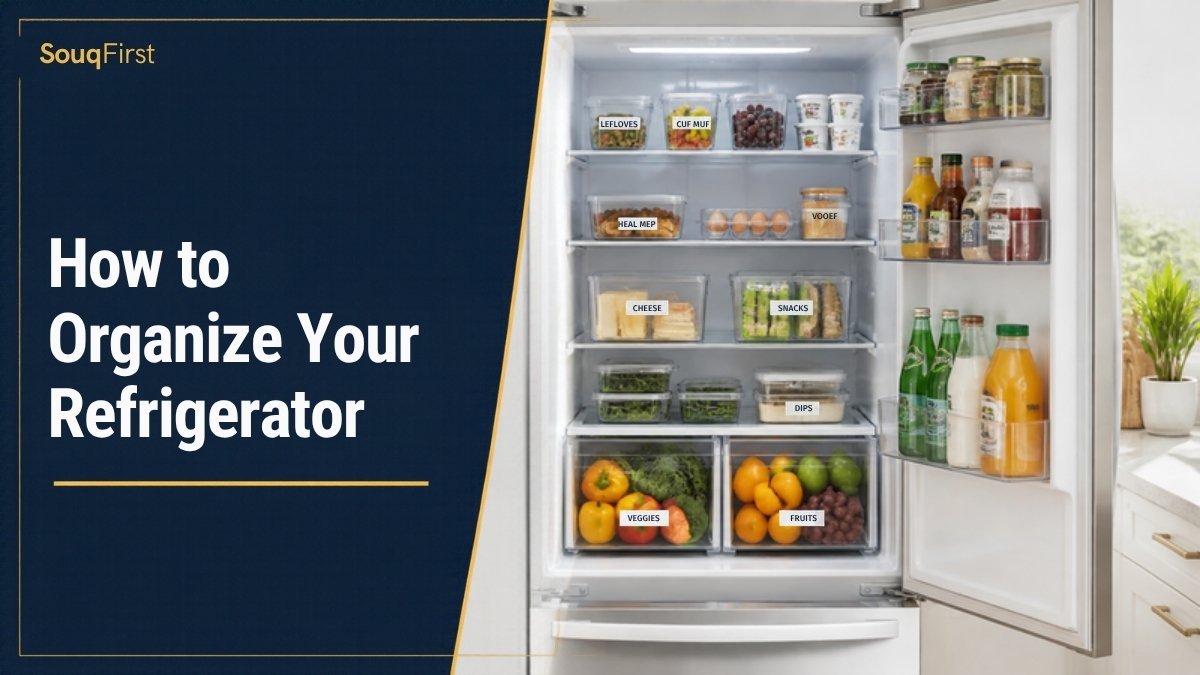
A well-organized refrigerator does more than look nice. It keeps food safer, helps produce last longer, and makes it easy to see what you have before you shop. Different parts of a fridge are slightly different temperatures, so where you store food actually matters. Here is a simple shelf-by-shelf plan.
Start with the right temperature
The U.S. Food and Drug Administration recommends keeping your refrigerator at 40°F or below and your freezer at 0°F. An inexpensive appliance thermometer is the easiest way to check, because many built-in dials don’t show an exact temperature.
Step 1: Empty, clean and check dates
Take everything out, throw away expired or spoiled food, and wipe the shelves and drawers with warm, soapy water. Dry them before putting food back.
Step 2: Know your zones
Upper shelves: ready-to-eat foods
Leftovers, drinks, deli items, yogurt and other foods that don’t need cooking. Keep leftovers at eye level so they get eaten.
Lower shelves: raw meat, poultry and seafood
Store raw meat on the bottom shelf, in a container or on a tray. If it leaks, juices can’t drip onto ready-to-eat foods below it. This is one of the most important food safety habits.
Middle shelves: dairy and eggs
Milk and eggs do best on an inside shelf, where the temperature is steadier than in the door.
Crisper drawers: produce
If your drawers have humidity controls, use a high-humidity drawer for leafy greens and vegetables that wilt, and a low-humidity drawer for fruits like apples and pears. Keeping apples away from greens also helps, because apples release ethylene gas that speeds up ripening. See how to store fruits and vegetables for more.
Door: condiments and drinks
The door is the warmest part of the fridge. Use it for condiments, sauces, juice and water, not milk or eggs.
Step 3: Use clear bins and labels
- Clear bins group small items like cheese, snacks or sauces so nothing gets lost in the back.
- A “use first” bin for food that needs to be eaten soon helps reduce waste.
- Turntables make it easy to reach jars in the corners.
- Labels with dates on leftovers remove the guesswork.
- Don’t overpack shelves; cold air needs room to circulate.
Step 4: Keep it organized
- First in, first out: when you unpack groceries, move older items to the front.
- Do a quick 5-minute check before shopping so you know what you already have.
- Wipe spills right away, especially under raw meat.
- Eat or freeze leftovers within 3 to 4 days, following USDA guidance.
Frequently asked questions
Where should raw meat go in the fridge?
On the bottom shelf, in a container or tray, so juices can’t drip onto other foods.
Should eggs go in the fridge door?
It’s better to keep eggs on an inside shelf, where the temperature is colder and more stable.
What temperature should my refrigerator be?
40°F or below, according to the FDA. The freezer should be at 0°F.
The bottom line
Set the right temperature, store raw meat at the bottom, keep ready-to-eat foods on top, use the drawers for produce, and save the door for condiments. Add a few clear bins and your fridge will stay organized with very little effort.
Find clear bins and containers in our Storage & Organization collection.
Leave a Reply