
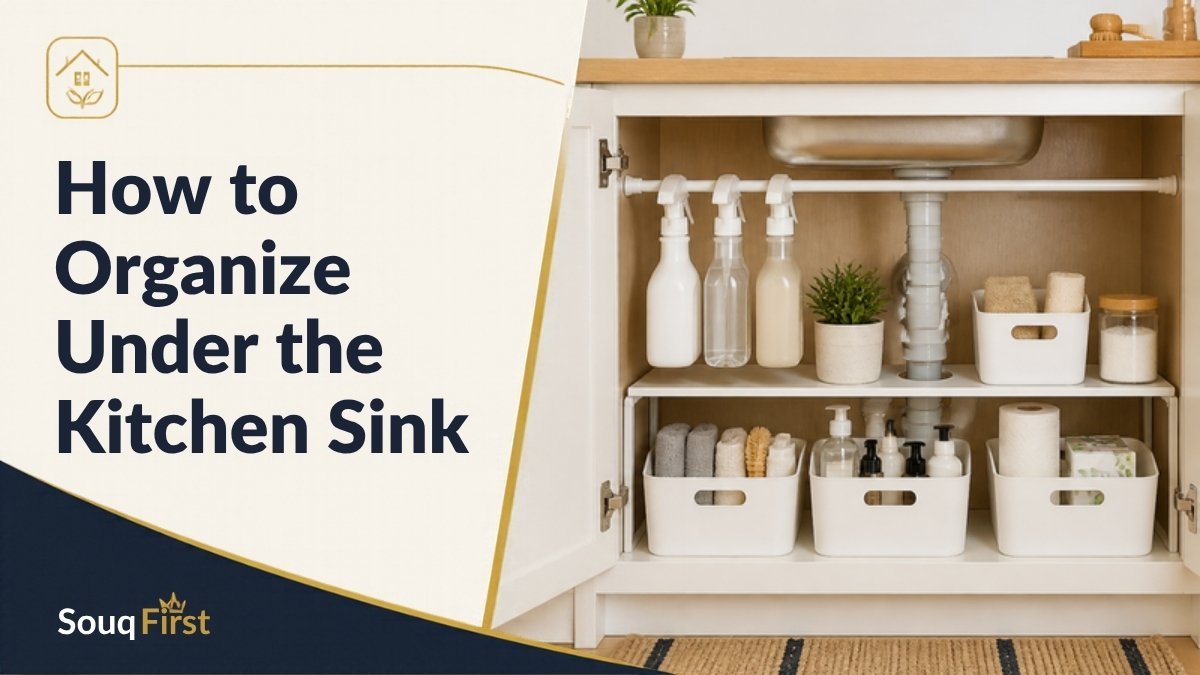
The cabinet under the kitchen sink is one of the most awkward spaces in the house. Pipes run through the middle, moisture is common, and cleaning supplies tend to pile up in a jumble. With a few simple steps, it can become one of the most useful storage spots in your kitchen.
Step 1: Empty and inspect
Take everything out. Look for signs of a leak, such as water stains, warped wood, drips from pipe joints or a musty smell. If you find one, fix it or call a plumber before you organize. Organizing over a leak only hides the problem.
Step 2: Clean and dry the cabinet
Wipe the floor and walls of the cabinet and let it dry completely with the door open.
Step 3: Add a waterproof liner
A waterproof cabinet mat or liner protects the cabinet floor from small drips and spills. Some mats have raised edges that hold a small amount of water, which makes leaks easier to spot.
Step 4: Edit your supplies
Throw away empty bottles, combine duplicates where it’s safe to do so, and move products you rarely use to another cabinet. Never combine different cleaning products into one container, since some chemicals react dangerously when mixed.
Step 5: Use bins to group items
Group supplies by task and give each group its own bin:
- Dish soap, sponges and dishwasher tablets
- Surface cleaners and cloths
- Trash bags and liners
- Extra sponges and gloves
Bins with handles work well because you can pull out a whole category at once. Clear bins help you see when supplies are running low.
Step 6: Hang spray bottles on a tension rod
Install a tension rod across the top of the cabinet and hang spray bottles by their triggers. This frees up floor space and uses height that usually goes to waste.
Step 7: Work around the pipes
Expandable under-sink shelves are designed to fit around plumbing. Two-tier pull-out organizers also help you reach items at the back without kneeling down and digging.
Step 8: Use the cabinet door
An over-the-door or adhesive caddy can hold sponges, brushes or rubber gloves. Measure first to make sure the door will still close without hitting the pipes.
Safety first if you have kids or pets
Many cleaning products are harmful if swallowed. If small children or pets live in or visit your home, install childproof cabinet latches or move cleaning products to a higher cabinet out of reach. Keep products in their original containers with labels intact.
Frequently asked questions
What should not be stored under the kitchen sink?
Avoid storing items that are damaged by moisture, such as paper goods you want to keep dry, and keep flammable products away from any heat source. If children are around, keep cleaning chemicals locked or up high.
How do I stop under-sink cabinets from getting moldy?
Fix leaks quickly, use a waterproof liner, and keep the area dry. Leave the door open after cleaning so the cabinet can air out.
What is the best organizer for under the sink?
An expandable shelf that fits around pipes, combined with a few bins and a tension rod, works for most cabinets.
The bottom line
Check for leaks, protect the floor, group items into bins and use the vertical space. Under-sink storage can be tidy and practical, and you will always know where the dish soap is.
Find bins, liners and organizers in our Home Organization and Storage & Organization collections.
Leave a Reply