
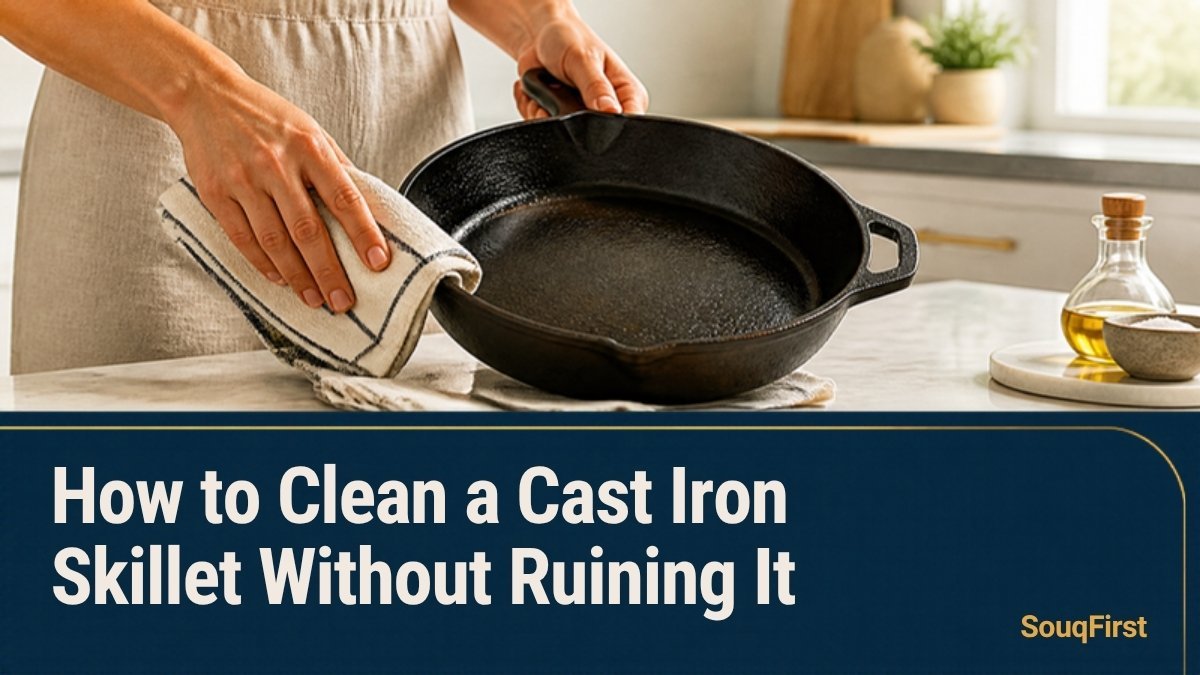
A cast iron skillet can last for generations, but only if you clean it the right way. The good news is that it takes less than five minutes, and you probably already have everything you need. This guide walks you through everyday cleaning, stuck-on food, rust, and the few habits that quietly damage cast iron.
Why cast iron needs different care
Cast iron is protected by a layer called seasoning. Seasoning is oil that has been heated until it bonds to the metal and forms a slick, dark coating. That coating gives the pan its natural nonstick surface and keeps it from rusting.
Your goal when cleaning is simple: remove the food, keep the seasoning, and get the pan completely dry.
What you need
- Hot water
- A stiff brush, non-scratch scrubber, or pan scraper
- Coarse kosher salt (for stubborn bits)
- A small amount of dish soap (optional)
- A clean towel or paper towels
- A neutral cooking oil, such as vegetable, canola or shortening
How to clean a cast iron skillet after every use
- Clean it while it is still warm. Food comes off far more easily before it cools and hardens. Let the pan cool enough to handle safely.
- Rinse with hot water. Scrub with a brush or scraper to lift food residue.
- Use a little soap if needed. A small drop of mild dish soap will not strip well-built seasoning. What damages seasoning is long soaking and harsh scrubbing, not a quick wash.
- Dry it immediately and completely. Wipe it with a towel, then set it on a burner over low heat for a minute or two to drive off any remaining moisture.
- Add a very thin coat of oil. While the pan is warm, rub in a few drops of oil with a paper towel, then wipe off the excess. The pan should look dark and satin, not greasy or sticky.
How to remove stuck-on food
If food is really stuck, pour a tablespoon or two of coarse kosher salt into the pan with a splash of water and scrub with a folded paper towel or brush. The salt works like a gentle abrasive. For very stubborn spots, add about half an inch of water, bring it to a simmer for a few minutes, then scrape once it has softened.
How to remove rust from cast iron
A little rust is common and usually easy to fix.
- Scrub the rusty area with steel wool or a stiff scrubber until you reach bare, clean metal.
- Wash, rinse and dry the pan completely.
- Rub a thin layer of oil over the whole pan, inside and out, and wipe off the excess.
- Bake it upside down in the oven according to the manufacturer’s re-seasoning instructions, with foil or a sheet pan on the rack below to catch drips. Many brands suggest a temperature in the range of 350 to 500°F for about an hour, so check the instructions for your pan.
Common mistakes to avoid
- Soaking it in the sink. Standing water is the fastest way to rust.
- Putting it in the dishwasher. The long, wet cycle and strong detergent can strip seasoning and cause rust.
- Letting it air-dry. Always dry it by hand and with a little heat.
- Using too much oil. Thick layers turn sticky. Thin is better.
- Storing it with the lid on. Trapped moisture can cause rust. If you stack pans, place a paper towel between them.
How often should you re-season?
Regular cooking with oil keeps seasoning in good shape, so many people rarely need a full oven re-season. Re-season when food starts sticking, the surface looks dull or patchy, or after removing rust. A quick stovetop oiling after each wash is usually enough to keep things on track.
Frequently asked questions
Can I use soap on cast iron?
Yes, a small amount of mild dish soap is fine for a well-seasoned pan. Avoid soaking and harsh scrubbing pads.
Can I cook tomatoes in cast iron?
Short cooking is generally fine in a well-seasoned pan. Long simmering of acidic foods like tomato sauce can wear the seasoning and add a metallic taste, so a stainless or enameled pot is a better choice for those.
Why is my cast iron sticky?
Sticky pans usually have too much oil that did not fully bond. Heat the pan and wipe out the excess, or bake it to finish curing the layer.
The bottom line
Cleaning cast iron comes down to three habits: scrub it while warm, dry it fully, and finish with a thin layer of oil. Do that each time, and your skillet will only get better with age.
Looking for more cookware help? Read our guide on how to choose a cookware set for your stove type, or browse our Cookware & Bakeware collection.
Leave a Reply