
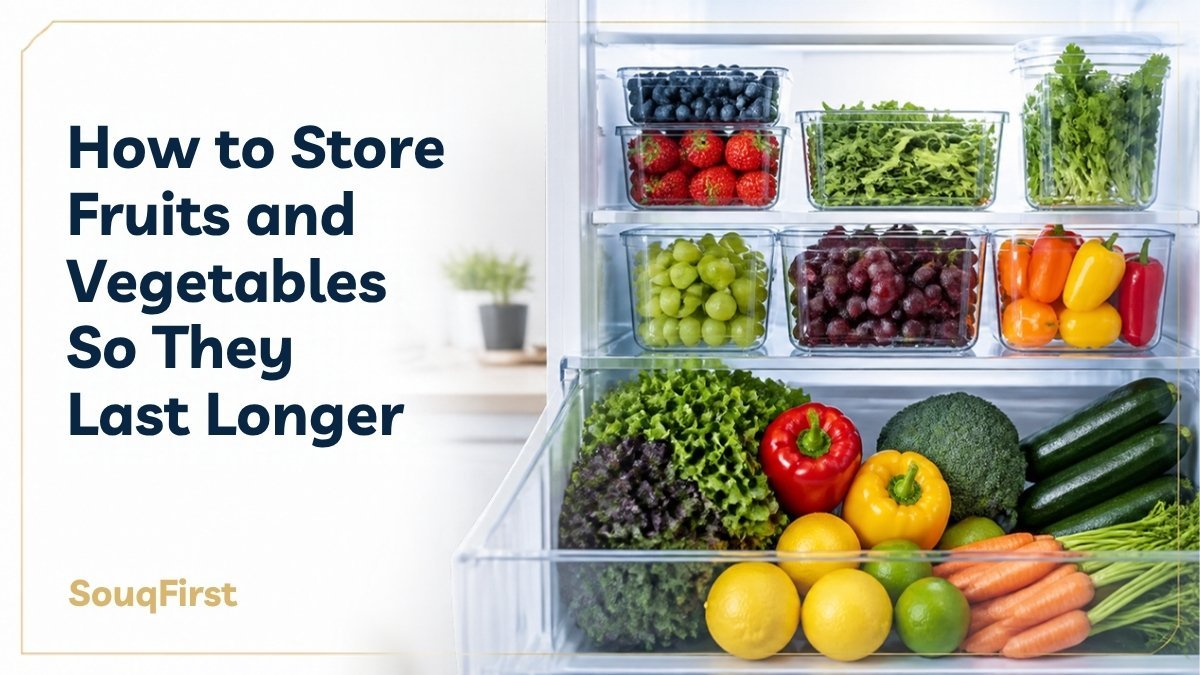
Few things are more frustrating than throwing away wilted lettuce or moldy berries a few days after shopping. Storing produce the right way helps it last longer, saves money and cuts food waste. The rules are simple once you know them.
The three big rules
- Know what belongs in the fridge and what does not. Some produce loses flavor or texture in the cold.
- Keep ethylene producers away from sensitive produce. Some fruits release a natural gas called ethylene that speeds up ripening in nearby produce.
- Control moisture. Too much moisture leads to mold; too little leads to wilting.
Store in the refrigerator
- Leafy greens: Wrap in a dry paper towel and store in a container or bag in the crisper drawer.
- Berries: Keep them dry and unwashed until you are ready to eat them. Remove any moldy berries right away.
- Broccoli, cauliflower, carrots, celery and peppers: Store in the crisper drawer. Cut carrots and celery stay crisp in a container of water in the fridge; change the water every few days.
- Grapes, cherries and citrus: Refrigerate to keep them fresh longer.
- Mushrooms: Keep them in a paper bag rather than sealed plastic, which traps moisture.
- Corn and green beans: Refrigerate and use within a few days for the best flavor.
Store on the counter
- Tomatoes: Keep them on the counter for the best flavor, stem side down, until ripe.
- Bananas: Store at room temperature. Once ripe, they can go in the fridge; the peel darkens but the fruit stays fine.
- Avocados, peaches, plums, pears and mangoes: Ripen on the counter, then refrigerate once ripe to slow further ripening.
- Whole melons: Keep on the counter until cut, then refrigerate the cut fruit in a covered container.
Store in a cool, dark, dry place
- Potatoes and sweet potatoes: Keep in a cool, dark, well-ventilated spot, such as a pantry, not the fridge.
- Onions and garlic: Store in a cool, dry place with good airflow. Keep onions away from potatoes, because together they can spoil faster.
- Winter squash: Keeps for weeks in a cool, dry place.
Know your ethylene producers
Apples, bananas, avocados, tomatoes, peaches, pears and cantaloupe release ethylene. Store them apart from ethylene-sensitive produce such as leafy greens, broccoli, cucumbers and berries. You can also use this to your advantage: put an unripe avocado in a paper bag with a banana to ripen it faster.
Fresh herbs
- Soft herbs like cilantro, parsley and basil: trim the stems and stand them in a jar of water like flowers. Keep basil on the counter and cover parsley and cilantro loosely with a bag in the fridge.
- Hardy herbs like rosemary and thyme: wrap in a slightly damp paper towel and refrigerate.
Smart storage habits
- Wash produce just before eating, not before storing, unless you dry it thoroughly.
- Use clear containers so you can see what needs to be eaten first.
- First in, first out: move older produce to the front when you unpack groceries.
- Check your fridge temperature. Food safety guidance recommends keeping the refrigerator at 40°F or below.
Frequently asked questions
Should apples go in the fridge?
Apples last much longer in the fridge than on the counter. Keep them away from leafy greens because they release ethylene.
Why do my berries get moldy so fast?
Moisture is usually the cause. Don’t wash them until you eat them, store them dry, and remove any moldy berries right away.
Can I store onions and potatoes together?
It’s best not to. They can cause each other to spoil faster.
The bottom line
Refrigerate greens and berries, keep tomatoes and bananas on the counter, store potatoes and onions in a cool dark place, and keep ethylene producers apart. These small habits make your groceries last noticeably longer.
Clear containers make this easier. See our Storage & Organization collection.
Leave a Reply