
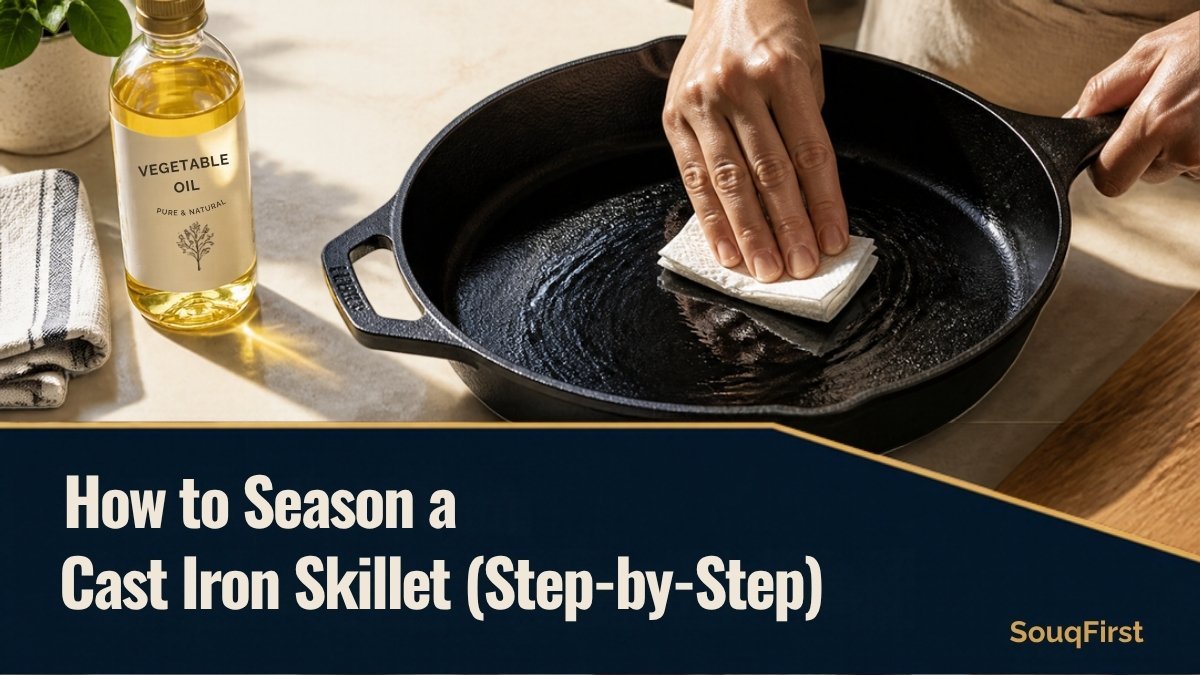
Seasoning is what makes cast iron special. It’s a thin layer of oil baked onto the metal until it hardens into a smooth, dark coating. Good seasoning helps food release, protects the pan from rust, and gets better the more you cook. Here is how to season a skillet from scratch or restore one that has lost its finish.
When do you need to season cast iron?
- When you buy a bare or unseasoned pan
- After removing rust
- When food starts sticking or the surface looks dull, patchy or gray
- Many new pans come pre-seasoned from the factory; extra coats can still help build a stronger finish
What you need
- Your cast iron skillet
- Dish soap, a stiff brush and a towel
- A neutral cooking oil with a high smoke point, such as vegetable oil, canola oil or shortening
- Paper towels or a lint-free cloth
- An oven and a sheet pan or foil
Step-by-step: how to season a cast iron skillet
- Clean the pan. Wash it with warm, soapy water and scrub away any food or rust. This is the one time a thorough soap scrub is fine.
- Dry it completely. Towel-dry, then place it on a burner over low heat for a few minutes until all moisture is gone.
- Apply a very thin layer of oil. Rub a small amount of oil over every surface: inside, outside and the handle.
- Wipe off the excess. This is the most important step. Wipe the pan with a clean paper towel as if you made a mistake and want to remove all the oil. The pan should look almost dry. Too much oil leaves a sticky finish.
- Bake it upside down. Place the skillet upside down on the middle oven rack, with a sheet pan or foil on the rack below to catch drips. Bake at the temperature your pan’s manufacturer recommends; many suggest roughly 450 to 500°F, for about one hour.
- Let it cool in the oven. Turn off the oven and let the pan cool inside.
- Repeat for a stronger finish. Two to three rounds of oil, wipe and bake build a durable, even layer.
How to keep seasoning strong
- Cook with oil or fat, especially in the first few weeks.
- Clean the pan soon after cooking, dry it fully and wipe on a few drops of oil. See our guide on how to clean a cast iron skillet.
- Avoid soaking and the dishwasher.
- Searing, frying and roasting help build seasoning; long-simmered acidic sauces can wear it down.
Troubleshooting
The pan is sticky
Too much oil was left on. Bake it again upside down for another hour to finish curing the layer, and use less oil next time.
The seasoning is flaking
Flakes usually mean thick layers that didn’t bond well. Scrub off the loose bits, then re-season with thin coats.
There are rust spots
Scrub the rust off down to bare metal, wash, dry and re-season the whole pan.
Frequently asked questions
What is the best oil to season cast iron?
A neutral oil with a high smoke point, such as vegetable oil, canola oil or shortening, works well and is easy to find. Follow your pan’s care instructions if the manufacturer recommends a specific product.
How often should I season cast iron?
A full oven seasoning is only needed occasionally. Regular cooking with oil and a quick oil wipe after cleaning keep the finish in good shape.
Can I season cast iron on the stovetop?
Yes, for maintenance. Heat the clean, dry pan, wipe on a thin layer of oil, and heat until it just starts to smoke. The oven method gives a more even coat for a full re-season.
The bottom line
Thin coats, wiped almost dry, baked hot and repeated: that is the whole secret of seasoning cast iron. Do it once properly, then let everyday cooking do the rest.
Browse our Cookware & Bakeware collection.
Leave a Reply